
BS 8214:2026 is the revised British Standard code of practice for fire-resisting and smoke-control doors. Published on 20 March 2026, it replaces BS 8214:2016 and broadens the guidance to cover fire doors made from different materials, not only timber.
For you as a building owner, property manager, facilities manager, landlord or duty holder, the practical message is straightforward: understand the doors installed in your premises, keep suitable information about them, and manage inspection and maintenance in a way that supports their intended performance.
BS 8214:2026 at a glance
- Published: 20 March 2026
- Replaces: BS 8214:2016
- Covers: Pedestrian fire-resisting and smoke-control doors, including timber, steel, glazed metal and composite doors
- Provides guidance on: Specification, design, installation, performance in use and maintenance
The standard is a code of practice. It provides recommendations and principles for people involved in fire doors throughout their lifecycle. It does not, by itself, mean every existing door must be replaced.
For the publication details and full scope, see the BSI entry for BS 8214:2026.
What has changed from BS 8214:2016?
The key change is the broader scope. The previous edition focused predominantly on timber fire door assemblies. BS 8214:2026 covers a wider range of materials, including timber, steel, glazed metal and composite designs.
It also considers how a fire door is supplied and managed as a complete system. Depending on the project, that may be described as an assembly, doorset or door kit. This broader view helps users consider the door in context, rather than treating the door leaf as the only relevant component.
The revised edition provides guidance across more stages of the process, including specification, design, installation and maintenance. It also clarifies aspects of installation guidance and gives greater attention to the information needed to support a door’s intended performance.
The Fire Protection Association’s overview of the revision also notes the expanded material coverage and the increased focus on supporting evidence.
What does “evidence” mean in practice?
A fire door’s performance depends on more than its appearance. The way it is specified, installed and maintained matters, as do the components and details that form part of the installed system.
The revised standard places more emphasis on identifying the supporting information for the particular door construction. For those responsible for a building, that means it is useful to know what information is available for the doors on site, and whether records can be linked to the relevant doors.
Depending on your building and records, useful information may include product details, installation documentation, inspection findings, maintenance history and details of any repairs or changes. The appropriate evidence will depend on the door and the information available. Where you are unsure, seek advice from a competent fire door professional rather than relying on a generic assumption.

What should you do as a building duty holder?
BS 8214:2026 is not a reason to panic or to assume your doors need immediate replacement. It is a prompt to review how you identify, inspect, maintain and record the fire doors in your premises.
A practical first review could include:
- Create or update your door list. Record the doors in your building and their locations so that inspections and follow-up work can be tracked clearly.
- Review the records you already hold. Gather available product, installation, inspection and maintenance information. Note where details are missing or need checking.
- Keep inspections organised. Set up a suitable inspection and maintenance process for your premises, taking account of your building’s needs and applicable responsibilities.
- Record findings and actions. Keep a clear history of what was inspected, what needs attention and what work was completed.
- Ask for competent advice where needed. If the door’s construction, supporting evidence or appropriate repair is unclear, get professional input before making changes.
These steps can help your team make informed decisions and keep the building’s fire door information easier to manage. They are not a substitute for a suitable fire risk assessment or advice specific to your building.
A standard, not a blanket replacement instruction
It is important to distinguish between a code of practice and a blanket legal instruction. The publication of BS 8214:2026 does not automatically require you to remove and replace every door installed under an earlier edition.
Your responsibilities depend on the building and the applicable fire safety requirements. The new edition can inform decisions about specification, installation, inspection and maintenance, but the condition and suitability of particular doors should be assessed on their own facts. If planned works or concerns about a door raise questions, take advice from a competent professional.
How clear records support efficient fire door management
A reliable record helps you see which doors have been checked, understand findings and plan follow-up work. It also makes it easier to manage inspections across multiple buildings without depending on scattered paperwork or staff memory.
FD Check’s custom-built digital inspection app supports this process by creating a digital record of fire doors and capturing inspection information on site. Clearer records can help your team track actions, reduce administration and keep maintenance moving.
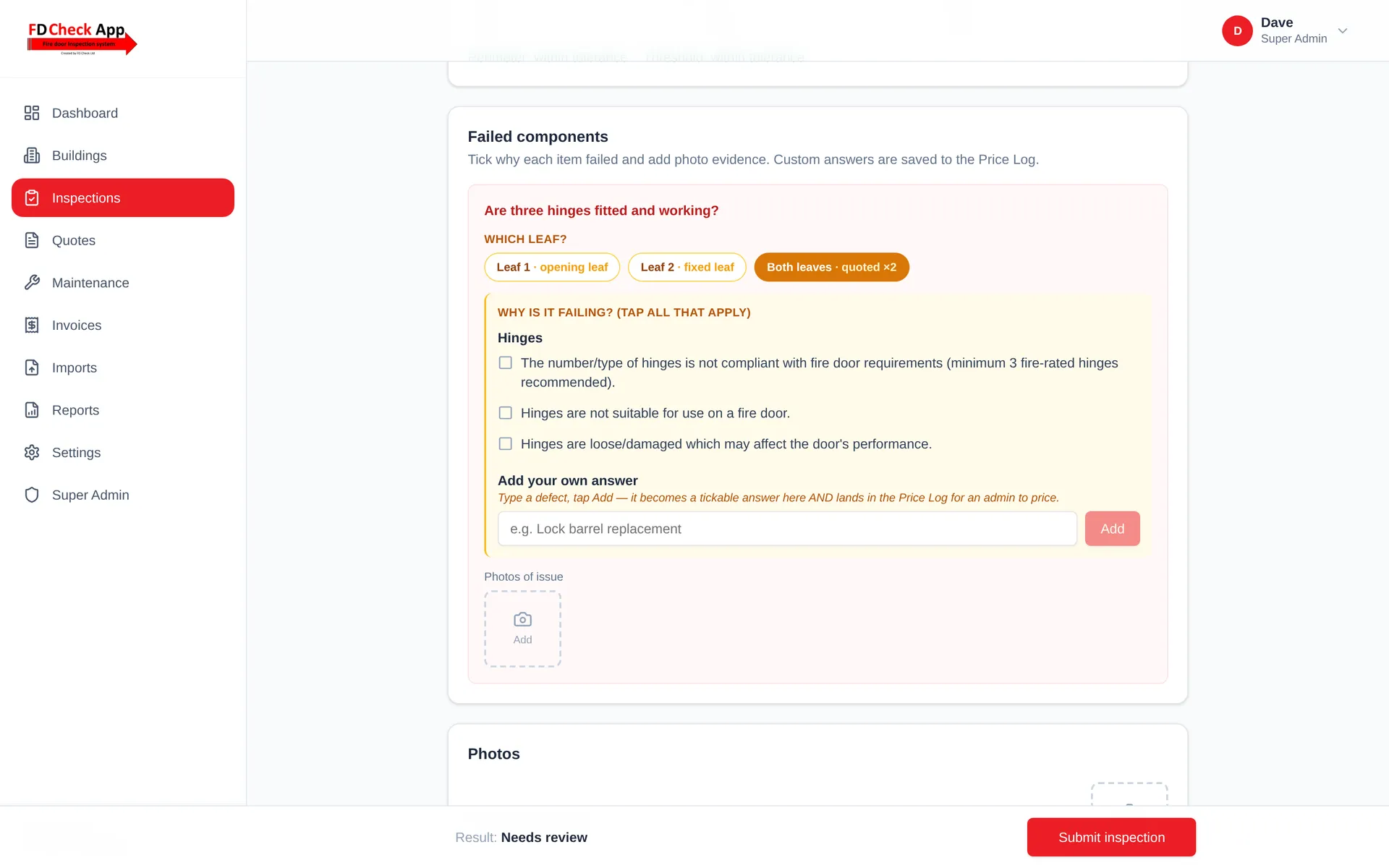
Our fire door inspection and maintenance services combine professional inspections with routine maintenance, programmed repairs and emergency callouts. We provide clear findings and practical next steps, helping you manage compliance activity efficiently and with less disruption to your premises.
Comprehensive support from inspection to maintenance
We understand that managing fire door compliance can involve many buildings, varied door types and a busy schedule. Our qualified team carries out inspections and provides the information needed to support your fire safety records. Where follow-up work is required, our maintenance services help you plan and address it.
With more than 10 years of experience, 500,000+ completed inspections and 500+ clients supported, we are committed to making fire door management reliable, efficient and cost-effective without compromising on quality or safety.
Our digital inspection platform helps bring door records and inspection information together, making it easier to track findings over time. It is a practical tool for managing information, not a replacement for professional judgement or the responsible person’s duties.
A clearer route to managing your fire doors
BS 8214:2026 broadens the standard’s coverage to include timber, steel, glazed metal and composite fire doors. It provides updated guidance across the door lifecycle and places greater emphasis on understanding the specific construction and its supporting information.
For your building, a sensible next step is to review your current door register, records and inspection arrangements. You do not need to assume every door requires replacement, but you should be able to understand what is installed and how it is being managed.
FD Check is here to help with professional inspections, digital records and practical maintenance support. Contact us to discuss your premises and inspection needs.